Buyer’s Guide
Choosing an OEM gummy manufacturer is not simply a matter of comparing unit prices. The right partner must translate your product brief into a stable formula, manufacture it consistently, document quality controls, support suitable packaging, and scale production as your brand grows.
- Define the formula, target market, packaging, and launch plan before requesting a quote.
- Compare quality controls, sampling support, documentation, MOQ, and scale-up capability together.
- Approve the sample and written specification before commercial production begins.
The 10-Point Manufacturer Checklist
Use these ten checkpoints to compare private label and custom gummy partners on more than price alone.
Product Brief
Define the consumer, market, ingredients, serving size, gummy base, flavor, shape, packaging, quantity, and launch date.
Formulation & Sampling
Confirm formula review, ingredient compatibility, flavor adjustment, pilot samples, revisions, and final sample approval.
Raw-Material Controls
Review supplier qualification, certificates of analysis, identity or purity information, allergens, and substitution controls.
Manufacturing Process
Understand weighing, mixing, cooking, depositing, conditioning, inspection, and packaging controls.
Testing & Batch Release
Confirm the finished-product specification, testing plan, documentation, and release authority before shipment.
Regulatory Fit
Check ingredient, dosage, label, warning, and claims requirements for the product’s destination market.
Customization Scope
Clarify what can change: formula, sweetener, flavor, color, shape, serving size, count, label, and packaging.
MOQ & Scale-Up
Compare sampling fees, production MOQ, volume pricing, lead time, and repeat-order capacity.
Packaging & Shelf Life
Review container protection, sealing, desiccant needs, storage conditions, case packing, and shipping environment.
Communication
Document responsibilities, approvals, change control, production updates, issue handling, and delivery milestones.
1. Start with a Clear Product Brief
Before contacting manufacturers, define the commercial and technical direction of your product. A useful brief should cover the target consumer, intended market, key ingredients, serving size, gummy base, flavor, shape, color, packaging format, expected order quantity, and target launch date.
- Gelatin or pectin-based gummy
- Standard, reduced-sugar, or sugar-free formula
- Preferred active ingredients and amount per serving
- Target bottle count, pouch size, or other packaging
- Sales market and labeling language
A clear brief helps the manufacturer identify formulation constraints early and provide a more realistic quotation, sampling plan, and production timeline.
2. Evaluate Formulation and Sampling Support
Custom gummy development often involves balancing active ingredients, taste, texture, stability, and processing conditions. Ask whether the manufacturer can support formula review, ingredient compatibility checks, flavor adjustment, sweetener selection, and pilot samples before mass production.
A reliable sampling process should include a documented product brief, sample feedback, formula revisions, and final approval. Avoid moving to commercial production until the agreed sample, specification, and packaging requirements are clearly recorded.
3. Review Raw-Material Controls
The finished gummy can only be as consistent as the materials used to produce it. Ask how suppliers are qualified and what documents are reviewed when ingredients arrive. Depending on the ingredient and target market, relevant records may include certificates of analysis, identity or purity information, allergen statements, origin documents, and microbiological results.
You should also confirm how substitutions are managed. A manufacturer should not change a key ingredient, source, or specification without an agreed review and approval process.
4. Understand the Manufacturing Process
Ask the supplier to explain the main production steps and the controls used at each stage. A typical process may include raw-material preparation, mixing and cooking, depositing, cooling or conditioning, finishing, inspection, and packaging.
Important questions include how batch weights are verified, how temperature and timing are controlled, how cross-contamination is prevented, and how gummy weight, appearance, texture, and uniformity are monitored. For a deeper overview, see How Are Functional Gummies Made?
Confirm product concept, market, dosage form, quantity, and packaging.
Evaluate ingredient compatibility, processing limits, and target specification.
Produce samples, collect feedback, and adjust flavor, texture, or formula.
Freeze the formula, packaging, testing plan, and acceptance criteria.
Control production parameters and complete in-process and finished checks.
Review batch results, approve release, and coordinate shipment.
5. Check Quality Testing and Batch Release
Quality testing should match the formula, product risk, specification, and destination market. Depending on the product, testing may cover appearance, average weight, moisture, microbiological indicators, active-ingredient content, heavy metals, or stability-related characteristics.
Ask which tests are performed internally, which are outsourced to qualified laboratories, and what documentation is supplied with each batch. Confirm who reviews the results and authorizes release before shipment.
6. Confirm Regulatory and Labeling Fit
Ingredients, dosages, nutrition panels, warnings, and marketing claims can be treated differently from one market to another. Tell potential manufacturers where the product will be sold and ask what documentation they can provide to support your regulatory review.
A manufacturer may assist with specifications and label information, but the brand owner should still obtain appropriate regulatory advice for the destination market. Be cautious of suppliers that promise universal compliance or make unsupported health claims.
7. Compare Real Customization Capabilities
“Custom” can mean anything from applying your label to an existing stock formula to developing a new formulation. Clarify which elements can actually be changed.
Formula
Active ingredients, serving amounts, gummy base, sweeteners, and dietary requirements.
Sensory Profile
Flavor, color, texture, coating, size, and custom gummy shape.
Packaging
Bottle or pouch format, count per pack, closure, label, carton, and shipping case.
Private Label
Retail-ready labeling and packaging based on your approved brand files.
OEM Development
Manufacturing from an agreed formula, specification, and packaging brief.
ODM Support
Product concept, formula selection, sampling, adjustment, and production coordination.
For an example of configurable ingredients, gummy specifications, and packaging, review Hongri Pharma’s OEM/ODM ACV Apple Cider Vinegar Keto Gummies.
8. Examine MOQ, Pricing, and Scale-Up
Minimum order quantity is only one part of commercial planning. Request a quotation that clearly separates formulation or sampling fees, gummy production, packaging components, label or carton printing, testing, and freight-related costs.
Ask how pricing changes at higher volumes and whether the equipment, labor, and material supply can support repeat orders. A low trial-order price is less valuable if the manufacturer cannot maintain quality or lead times when demand increases.
9. Plan Packaging, Shelf Life, and Logistics
Gummies can be sensitive to moisture, heat, and storage conditions. Packaging should be selected with product protection, transport, consumer convenience, and retail presentation in mind. Discuss container type, closure, induction seal, desiccant requirements, label material, case packing, and pallet configuration.
Ask how the proposed shelf life is supported and what storage conditions will appear on the label. If the product will travel through warm or humid regions, include shipping conditions in the risk assessment.
10. Assess Communication and Project Management
Good manufacturing outcomes depend on clear communication. Your partner should identify who manages the project, how specifications and approvals are documented, how changes are controlled, and how production or delivery issues are reported.
Look for specific answers, realistic timelines, and written follow-up. Slow or vague communication during the quotation stage often becomes more difficult once production has started.
Common Warning Signs
- Quotations that do not define formula, testing, or packaging assumptions
- Unsupported medical or disease-treatment claims
- No clear sample approval or change-control process
- Reluctance to provide specifications or quality documentation
- Unrealistic lead times without a production plan
- Pressure to begin bulk production before the sample is approved
OEM Gummy Manufacturing FAQ
What information should I send an OEM gummy manufacturer first?
Share the target market, intended ingredients, serving size, gummy base, flavor, shape, packaging, estimated quantity, and launch timeline.
Can gummy formulas be fully customized?
Customization may include active ingredients, dosage, sweeteners, flavors, colors, shape, texture, count per pack, and packaging. Feasibility depends on ingredient behavior and processing limits.
Should I approve a sample before bulk production?
Yes. The approved sample, formula, specification, packaging, and testing plan should be documented before commercial manufacturing begins.
What affects the MOQ for private label gummies?
Formula complexity, ingredient purchasing quantities, gummy shape, packaging components, printing requirements, and production scheduling can all affect MOQ.
Who is responsible for regulatory compliance?
The manufacturer can provide specifications and supporting documents, while the brand owner should confirm ingredient, label, claims, and market requirements with appropriate regulatory advice.
Final Takeaway
The best OEM gummy manufacturer is not necessarily the supplier with the lowest quote. It is the partner that can understand your product brief, communicate technical limits, produce an approved sample, maintain batch consistency, and provide the documentation needed for your market.
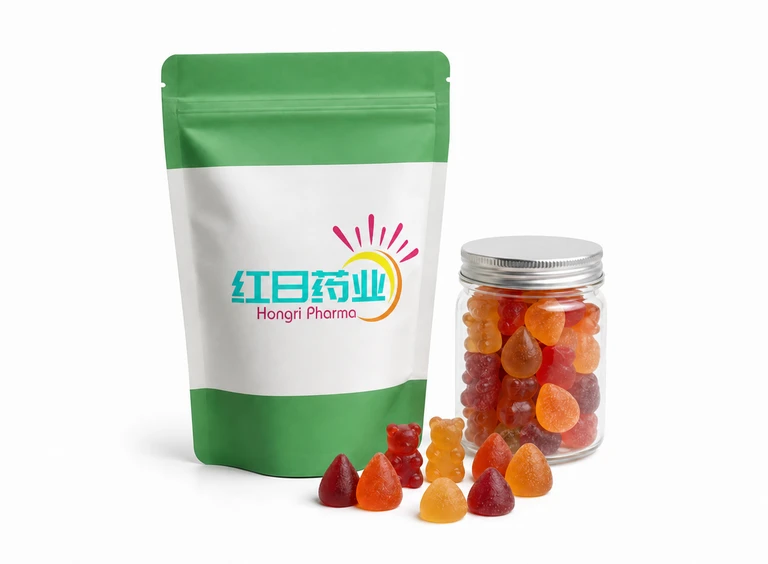
Hongri Pharma supports formula selection, sampling, gummy customization, private label packaging, manufacturing, inspection, and delivery coordination. Learn more about our OEM/ODM customization services.
Start Your Gummy Project
Need help evaluating your formula and manufacturing plan?
Share your target ingredients, dosage form, quantity, packaging needs, destination market, and timeline. Our team will help you identify the next practical step.
Samples are available before commercial production.
Need help with a similar request?
Share your product requirements, timeline and cooperation goals. We can help clarify the next step.